Startup MVP Development: Build Fast, Learn Faster
Startup MVP development is the discipline that separates funded, product-market-fit companies from those that burn through runway building the wrong thing. Most failed startups did not run out of money — they ran out of time because they built too much before validating anything.
This guide covers everything you need to make smart decisions: what an MVP actually is, which frameworks work, how to choose your tech stack, realistic timelines and costs, why Ruby on Rails remains a top choice for rapid MVP development, and how to avoid the mistakes that kill early-stage products.

What Is an MVP and Why It Matters for Startups
A Minimum Viable Product (MVP) is the smallest version of your product that delivers enough value to attract early users and generate real feedback. It is not a prototype. It is not a beta. It is a functional product — stripped to its core — that lets you test your riskiest assumptions before committing full resources.
Eric Ries, who popularized the concept in The Lean Startup, defines an MVP as the version of a new product that allows a team to collect the maximum amount of validated learning about customers with the least effort. That definition still holds.
Key Insight: The goal of startup MVP development is not to ship a product. The goal is to answer a specific question about your market — with real user behavior, not surveys.
Why Startups Cannot Skip the MVP Stage
According to CB Insights research on startup failure, 35% of startups fail because there is no market need for their product. Startup MVP development directly attacks that risk by forcing you to validate demand before scaling.
The three core questions every MVP must answer:
- Does the problem exist? Real users must confirm they have the pain you are solving.
- Does your solution work? Users must be able to use it and get value from it.
- Will they pay for it? Willingness to pay is the only signal that matters for a business.
If your MVP cannot answer these three questions, it is not an MVP — it is a feature set looking for a problem.
MVP vs. Prototype vs. Beta
Comparing MVP, Prototype, and Beta
| Stage | Purpose | Audience | Functional? |
|---|---|---|---|
| Prototype | Visualize the concept | Internal team, investors | No |
| MVP | Validate core assumptions | Real target users | Yes |
| Beta | Test at scale before launch | Broader user group | Yes, with known bugs |
| Full Product | Serve the market | General public | Yes |
The distinction matters because teams often confuse prototypes with MVPs and ship something that cannot generate real behavioral data.
MVP Development Frameworks and Methodologies
Startup MVP development does not happen in a vacuum. The framework you choose shapes your team's velocity, your feedback loops, and ultimately your product decisions.
Lean Startup Methodology
The Lean Startup methodology built around the Build-Measure-Learn loop is the most widely used framework for startup MVP development. Each cycle should be as short as possible — ideally two to four weeks.
- Build: Develop the smallest feature set that tests your hypothesis.
- Measure: Collect quantitative data (activation rate, retention, conversion) and qualitative feedback (user interviews, support tickets).
- Learn: Decide whether to pivot, iterate, or double down based on evidence.
The failure mode here is teams that build too much in one cycle. If your build phase takes longer than four weeks, you are not doing Lean — you are doing waterfall with a new name.
Agile Sprints for MVP Teams
Most startup teams run two-week sprints. Each sprint delivers a testable increment. For startup MVP development, the sprint backlog should contain only features that directly test your core hypothesis — nothing else.
Common sprint structure for MVP teams:
- Day 1–2: Sprint planning, user story mapping
- Day 3–10: Development, daily standups, continuous integration
- Day 11: Internal QA and staging review
- Day 12: Sprint demo, retrospective, backlog refinement
Jobs-to-Be-Done Framework
Before writing a single line of code, use Jobs-to-Be-Done (JTBD) to define what your user is actually trying to accomplish. A user does not want "a project management tool" — they want to stop missing deadlines and look competent to their manager. That distinction changes everything about what your MVP needs to do.
Technology Stack Selection for MVP Development
Choosing the wrong stack for startup MVP development is one of the most expensive mistakes you can make — not because of licensing costs, but because of the time cost of rebuilding later.

What Makes a Stack MVP-Ready?
The right stack for startup MVP development shares four characteristics:
- Developer velocity: How fast can your team ship features? Frameworks with strong conventions (Rails, Django, Laravel) beat flexible-but-verbose options for speed.
- Ecosystem maturity: Does the framework have libraries for auth, payments, email, file uploads, and background jobs out of the box? Reinventing these wheels kills MVPs.
- Scalability floor: You do not need to handle 10 million users on day one, but your stack should not require a full rewrite at 10,000 users.
- Hiring market: Can you find developers? A niche stack may be technically superior but will bottleneck your team growth.
Stack Comparison for Startup MVPs
MVP Technology Stack Comparison
| Stack | Best For | Time to First Feature | Scalability | Ecosystem |
|---|---|---|---|---|
| Ruby on Rails | SaaS, marketplaces, B2B apps | Fast | High | Excellent |
| Django (Python) | Data-heavy apps, ML integration | Fast | High | Strong |
| Node.js + Express | Real-time apps, APIs | Moderate | High | Large |
| Laravel (PHP) | E-commerce, CMS-adjacent | Fast | Moderate | Strong |
| Next.js (React) | Content-heavy, SEO-critical | Moderate | High | Growing |
For most SaaS and marketplace MVPs, Ruby on Rails and Django lead on developer velocity. If your MVP is primarily a React.js frontend consuming APIs, pairing React.js + Ruby on Rails gives you the best of both worlds — fast backend conventions and a modern frontend.
MVP Development Timeline and Cost Estimation
One of the most common questions in startup MVP development is: "How long will this take and what will it cost?" The honest answer is: it depends on scope, but you can make it predictable.
Realistic MVP Timeline by Complexity
- Simple MVP (4–8 weeks): Single core feature, basic auth, no third-party integrations. Examples: landing page with email capture, basic CRUD application, single-workflow tool.
- Mid-complexity MVP (8–16 weeks): Multi-role user system, 2–3 integrations (Stripe, Twilio, S3), basic analytics. Examples: SaaS subscription tool, two-sided marketplace with payments.
- Complex MVP (16–24 weeks): Custom algorithms, real-time features, complex permission systems, mobile app. Examples: fintech platforms, multi-tenant enterprise tools, AI-powered products.
Cost Drivers in Startup MVP Development
The largest cost variables in startup MVP development are:
- Team composition: In-house vs. agency vs. freelancers. An agency specializing in Rails and SaaS development will typically deliver faster than assembling a freelance team from scratch.
- Feature scope: Every feature added to an MVP increases timeline and cost non-linearly. A feature that takes two days to build takes four days to test and one day to document.
- Third-party integrations: Payment processors, communication APIs, and analytics platforms add complexity even when they save development time overall.
- Infrastructure choices: Managed services (Heroku, Render, Railway) reduce DevOps overhead for early MVPs. Self-managed infrastructure is rarely worth it before product-market fit.
Contact a development partner for a personalized quote — costs vary significantly based on your specific feature requirements, team location, and target market.
Ruby on Rails for Rapid MVP Development
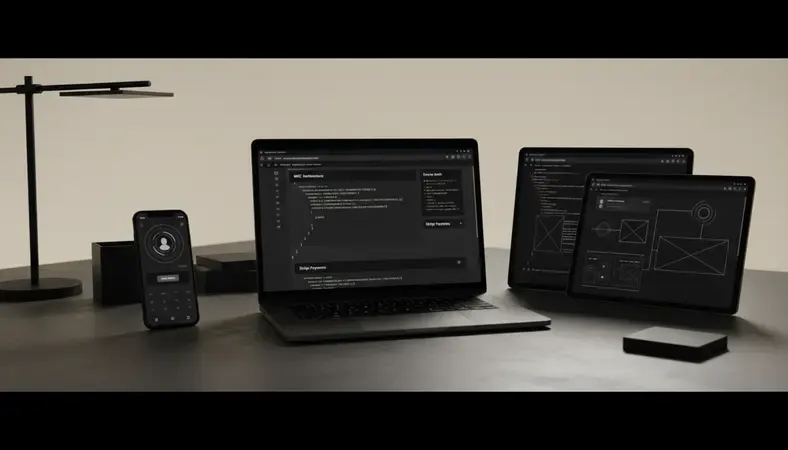
Ruby on Rails remains one of the most productive frameworks for startup MVP development. This is not nostalgia — it is a structural advantage that compounds over the first six months of a product's life.
Why Rails Accelerates MVP Development
Rails follows Convention over Configuration. That means your team makes fewer decisions about project structure and spends more time building features that matter to users.
The Rails ecosystem provides production-ready solutions for every common MVP requirement:
- Authentication: Devise handles user registration, sessions, password reset, and OAuth in hours, not days.
- Payments: Stripe integration via the
paygem orstripe-rubyis well-documented and battle-tested. - Background jobs: Sidekiq + Redis handles async processing for emails, notifications, and data imports.
- File uploads: Active Storage with S3 is built into Rails — no third-party service needed.
- Real-time features: Hotwire & Turbo in Rails enables real-time UI updates without writing a separate JavaScript framework. This is a significant velocity advantage for MVPs that need live notifications or collaborative features.
Rails Performance at MVP Scale
A common objection to Rails is performance. At MVP scale — meaning under 50,000 monthly active users — Rails performance is a non-issue when configured correctly. Rails Performance Optimization techniques like database indexing, query optimization with bullet, and caching with Redis handle the load of any early-stage product comfortably.
GitHub, Shopify, and Basecamp all built on Rails and scaled to millions of users. The performance ceiling is not Rails — it is database design and infrastructure decisions.
When Rails Is Not the Right Choice
Rails is not ideal for every MVP. If your product requires:
- Heavy real-time computation or WebSocket-first architecture at scale
- A mobile-first experience where Flutter + Ruby on Rails is a better pairing (Rails as API, Flutter as the client)
- Machine learning pipelines as the core product feature (Python/Django is better positioned)
In those cases, a hybrid approach or a different primary framework makes more sense.
MVP Testing, Validation, and Iteration Strategies
Shipping your MVP is the beginning, not the end. Startup MVP development only creates value if you have a rigorous system for learning from what you ship.
Defining Your Validation Metrics
Before launch, define your success metrics. Vanity metrics (page views, sign-ups) tell you nothing. Behavioral metrics tell you everything.
The metrics that matter for startup MVP validation:
- Activation rate: What percentage of sign-ups complete the core action your product is built around?
YOUTUBE_EMBED: https://www.youtube.com/watch?v=mE7opKGmc24
- Retention (Day 7, Day 30): Are users coming back? A Day-30 retention above 20% for a new SaaS product is a strong signal.
- Net Promoter Score (NPS): Would users recommend this to a colleague?
- Time to value: How long does it take a new user to experience the core benefit?
User Testing Methods
Combine quantitative and qualitative methods:
- Usability testing: Watch five users attempt your core workflow without assistance. Five users reveal 85% of usability problems.
- Session recording: Tools like Hotjar or FullStory show where users drop off and what confuses them.
- User interviews: Schedule 30-minute calls with your most active and least active users. The contrast reveals your product's real value proposition.
- A/B testing: For conversion-critical flows (onboarding, checkout), run controlled experiments. Do not A/B test features that have not been validated qualitatively first.
The Pivot vs. Persevere Decision
After each iteration cycle, you face a binary decision: pivot or persevere. Pivot means changing a fundamental assumption about your product, market, or business model. Persevere means continuing on the current trajectory with refinements.
The signal to pivot is not "users do not like the product." It is "users do not use the product the way we expected, but they are using it for this other thing consistently." That pattern is a market signal worth following.
Common MVP Development Pitfalls and Best Practices
Startup MVP development has well-documented failure modes. Most teams hit at least two of these. Knowing them in advance is the only reliable way to avoid them.
The Seven Most Common MVP Mistakes
- Building too many features: The M in MVP stands for Minimum. If your MVP has more than three core features, it is not minimum. Cut until it hurts, then cut one more thing.
- Skipping user research before building: Startup MVP development starts with conversations, not code. Talk to 20 potential users before writing a line of code.
- Treating the MVP as the final product: Your MVP will be embarrassing in 18 months. That is correct. Ship it anyway.
- Ignoring non-functional requirements: Auth, data security, and basic performance are not optional even in an MVP. A product that leaks user data or crashes under minimal load cannot generate valid feedback.
- No feedback loop: Shipping without a mechanism to collect and act on user feedback is not MVP development — it is just shipping.
- Wrong success metrics: Measuring sign-ups instead of activation. Measuring page views instead of retention. Define behavioral metrics before launch.
- Perfectionism disguised as quality: "We need one more sprint to polish the UI" is the most common way MVPs never launch. Done and shipped beats perfect and delayed every time.
Best Practices That Separate Fast-Moving Teams
- Time-box every decision: If a technical or design decision takes more than 30 minutes to resolve, make a call and move on. Document the decision and revisit it in the next sprint if needed.
- Automate testing early: Rails Testing with RSpec from sprint one prevents regression debt from accumulating. An untested MVP becomes untestable fast.
- Use managed infrastructure: Do not manage your own servers before product-market fit. Managed platforms reduce DevOps burden and let your team focus on product.
- Build a feedback channel into the product: An in-app feedback widget, a Slack community, or a simple "what would make this better?" email survey — make it easy for users to tell you what they need.
Why It Matters: The teams that win at startup MVP development are not the ones who build the most — they are the ones who learn the fastest. Velocity is a function of feedback loop speed, not sprint capacity.
Common Questions About Startup MVP Development
How long does startup MVP development typically take?
Most startup MVPs take between 8 and 16 weeks to reach a state where real users can validate core assumptions. Simple single-feature MVPs can ship in 4–6 weeks. Complex products with multiple user roles, payment flows, and third-party integrations realistically need 16–24 weeks. The most common mistake is underestimating by 50% due to scope creep and integration complexity.
What is the difference between an MVP and a proof of concept?
A proof of concept (POC) answers a technical question: "Can we build this?" It is typically internal, not user-facing. An MVP answers a market question: "Should we build this?" It is always user-facing and always functional. Startup MVP development is about market validation, not technical validation.
Should I build my MVP in-house or hire a development agency?
It depends on your team's existing capabilities and your timeline. If you have technical co-founders with Rails or full stack development experience, building in-house is faster in the short term. If you do not, a full stack development agency specializing in your target stack will outperform a freelance team assembled from scratch — especially for SaaS and marketplace MVPs where architectural decisions made early have long-term consequences.
How do I know when my MVP is ready to launch?
Your MVP is ready to launch when it can deliver the core value proposition to a real user without breaking. Not when it is polished. Not when every edge case is handled. When a user can complete the primary workflow and experience the core benefit, ship it. The feedback you get from 50 real users in week one is worth more than another month of internal iteration. Ready to get started? Visit Techvinta 2 to learn more.
What metrics should I track after launching my MVP?
Track activation rate (users who complete the core action), Day-7 and Day-30 retention, and time to value. For SaaS products, also track MRR growth rate and churn. Avoid vanity metrics like total sign-ups or social media followers — they do not tell you whether your product is working.
The Bottom Line
Startup MVP development is a discipline, not a shortcut. The teams that do it well ship fast, learn faster, and build products users actually want. If you are building a SaaS product, marketplace, or custom web application and need a development partner who specializes in Ruby on Rails and rapid MVP delivery, talk to the team at Techvinta 2 — describe your product, and get a scoped development plan built around your validation goals.

